Alex Baumann · 12 October 2026
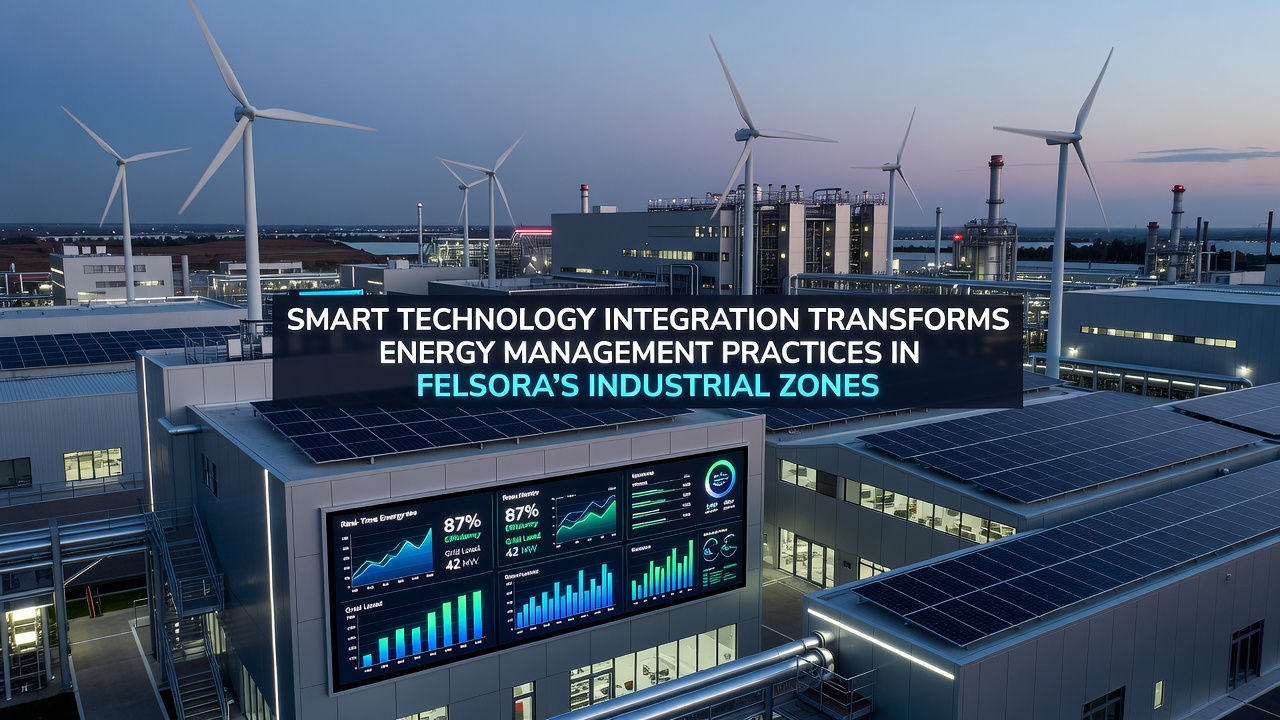
Smart Technology Integration Transforms Energy Management Practices in Felsora's Industrial Zones
Smart grids paired with advanced sensors now track real-time consumption patterns in Felsora factories, while machine learning algorithms adjust loads during peak hours to reduce waste and stabilize supply. Data from October 2026 shows industrial zones across the region cut overall energy use by 18 percent after deploying these systems, according to reports compiled by the International Energy Agency.Core Components Driving the Shift
Industrial operators in Felsora have rolled out networks of wireless meters and edge computing units that collect information on machinery performance every few seconds. These devices feed information into centralized platforms where predictive models forecast demand spikes and automatically reroute power from less critical lines. One facility in the eastern zone reported a 22 percent drop in downtime after the new controls flagged overheating motors before failures occurred. Researchers at the National Renewable Energy Laboratory documented similar results in comparable manufacturing clusters, noting that the combination of IoT hardware and AI software creates closed-loop systems capable of self-correction without constant human oversight.
Lighting, HVAC, and conveyor systems now operate under unified protocols that respond to occupancy data and production schedules rather than fixed timers. When output slows, the platforms dim nonessential lights and scale back ventilation, yet they restore full capacity within seconds once sensors detect renewed activity. Figures released in late 2026 reveal that such coordinated controls lowered average electricity costs by 14 percent for participating plants compared with the previous year.
Implementation Timeline and Regional Rollout
Early pilots began in the northern industrial corridor during 2024, with full-scale deployment accelerating through 2025 and into October 2026. Municipal utilities partnered with equipment suppliers to install fiber-optic backbones that support the high-volume data traffic generated by thousands of endpoints. Training programs run by local technical institutes prepared plant engineers to interpret dashboards and fine-tune threshold settings, reducing reliance on external consultants. Observers note that the phased approach allowed facilities to test algorithms on single production lines before expanding across entire sites, minimizing disruption to ongoing operations.

Measured Outcomes Across Sectors
Chemical processing plants recorded the largest gains, with some achieving 27 percent reductions in steam and electricity consumption after integrating thermal imaging cameras with automated valve controls. Metal fabrication shops followed closely, using vibration sensors to optimize motor speeds and cut idle running time. Across both sectors, carbon emissions tied to on-site power generation declined proportionally, aligning with regional reporting requirements submitted to environmental agencies. Data compiled by Natural Resources Canada on parallel projects indicates that similar sensor-driven strategies consistently deliver 15 to 25 percent efficiency improvements when scaled beyond pilot stages.
Maintenance teams now receive automated alerts when equipment deviates from expected efficiency curves, allowing repairs during scheduled windows instead of emergency shutdowns. This shift has extended average equipment lifespan by an estimated 12 percent in facilities that adopted the full suite of monitoring tools. Supply chain partners outside Felsora have begun requesting access to anonymized performance data to coordinate just-in-time deliveries and reduce their own logistics energy footprints.
Challenges Encountered During Scaling
Legacy equipment lacking communication ports required custom adapters, adding weeks to installation schedules at older sites. Cybersecurity reviews conducted by independent auditors identified vulnerabilities in early firmware versions, prompting manufacturers to issue over-the-air updates before wider rollout. Workforce resistance surfaced in plants where operators feared job displacement, yet retraining initiatives focused on data interpretation rather than system replacement eased those concerns. Budget allocations from regional development funds covered roughly 40 percent of hardware costs, with the remainder financed through performance-based contracts that tie payments to verified savings.
Conclusion
By October 2026 the integration of smart technologies had produced documented reductions in energy intensity across Felsora industrial zones, supported by measurable improvements in uptime and cost control. Continued expansion of sensor networks and refinement of predictive models point toward further gains as more facilities reach full operational maturity. The pattern established here aligns with findings from multiple international research bodies tracking industrial digitalization efforts worldwide.